Fu He Hui (福和慧), Shanghai
I booked this just a few days ahead of my trip to China. Despite that my friend, who showed me around Shanghai, warned me, I liked this place; it was one of the best restaurants, equally as Cocina Hermanos Torres, in 2025. Especially, it is a vegetarian restaurant. Chinese people use much more vegetables daily. More importantly, I believe, Chinese cooking styles are much more suitable and subtle for vegetables such as stir-fry and steam.
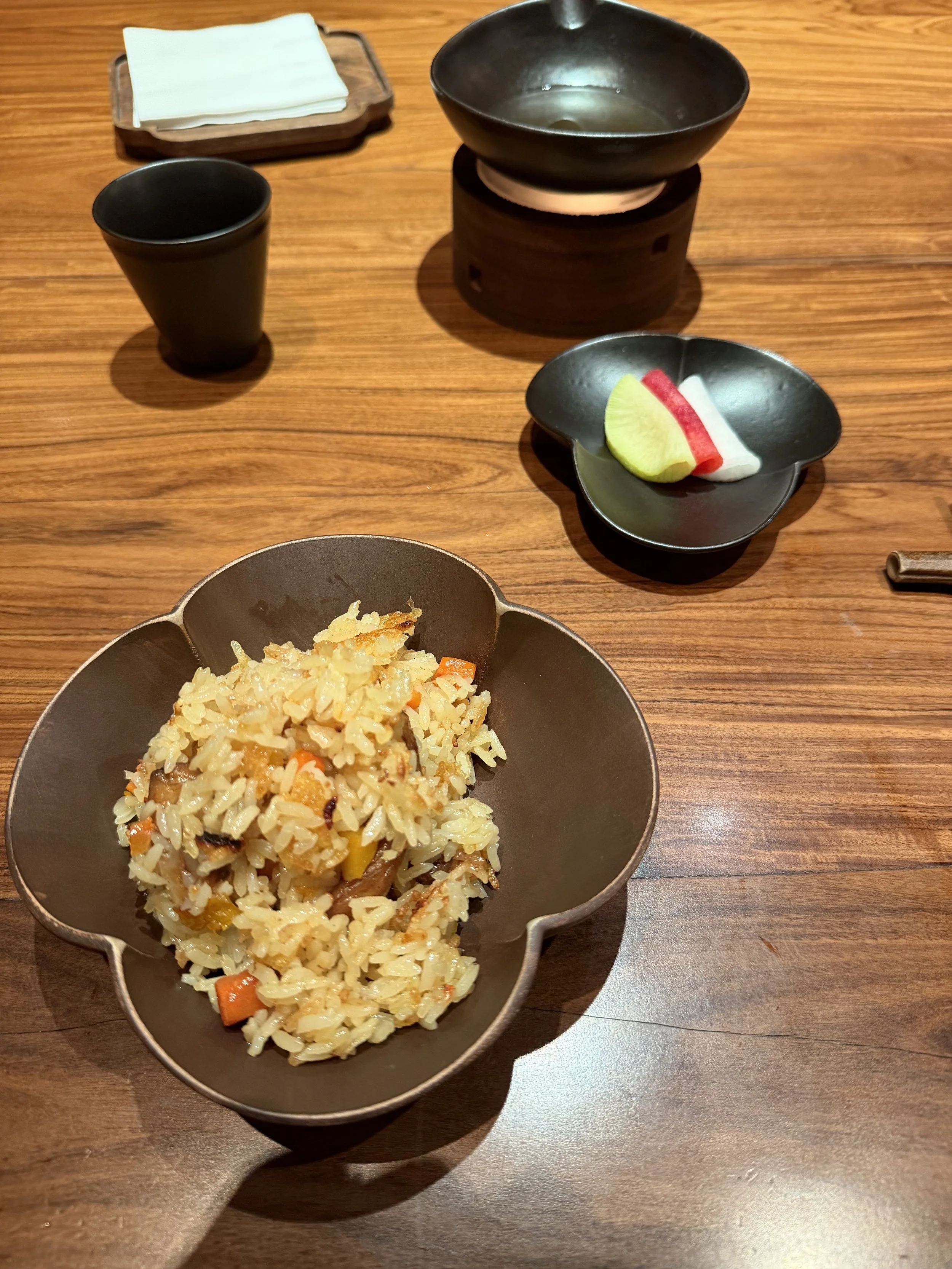
The restaurant is located in a small house, in the old town. The area was very tourism and busy even for a Monday noon time. I got half of the room, sharing with another single customer, yet split by a folding screen (屏风), so we never saw nor talked to each other during the lunch service. There was also a serving table by the wall of the room.
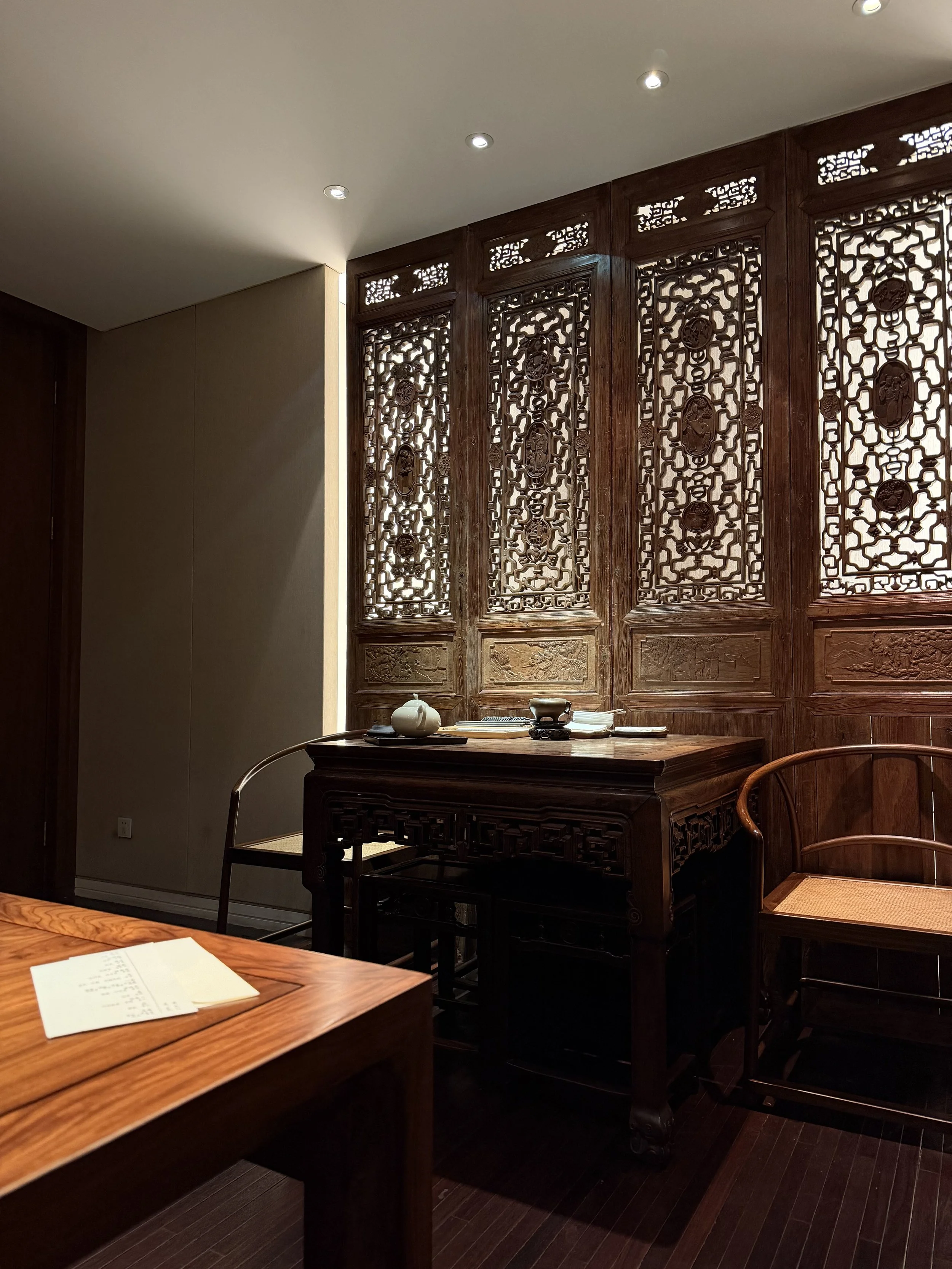
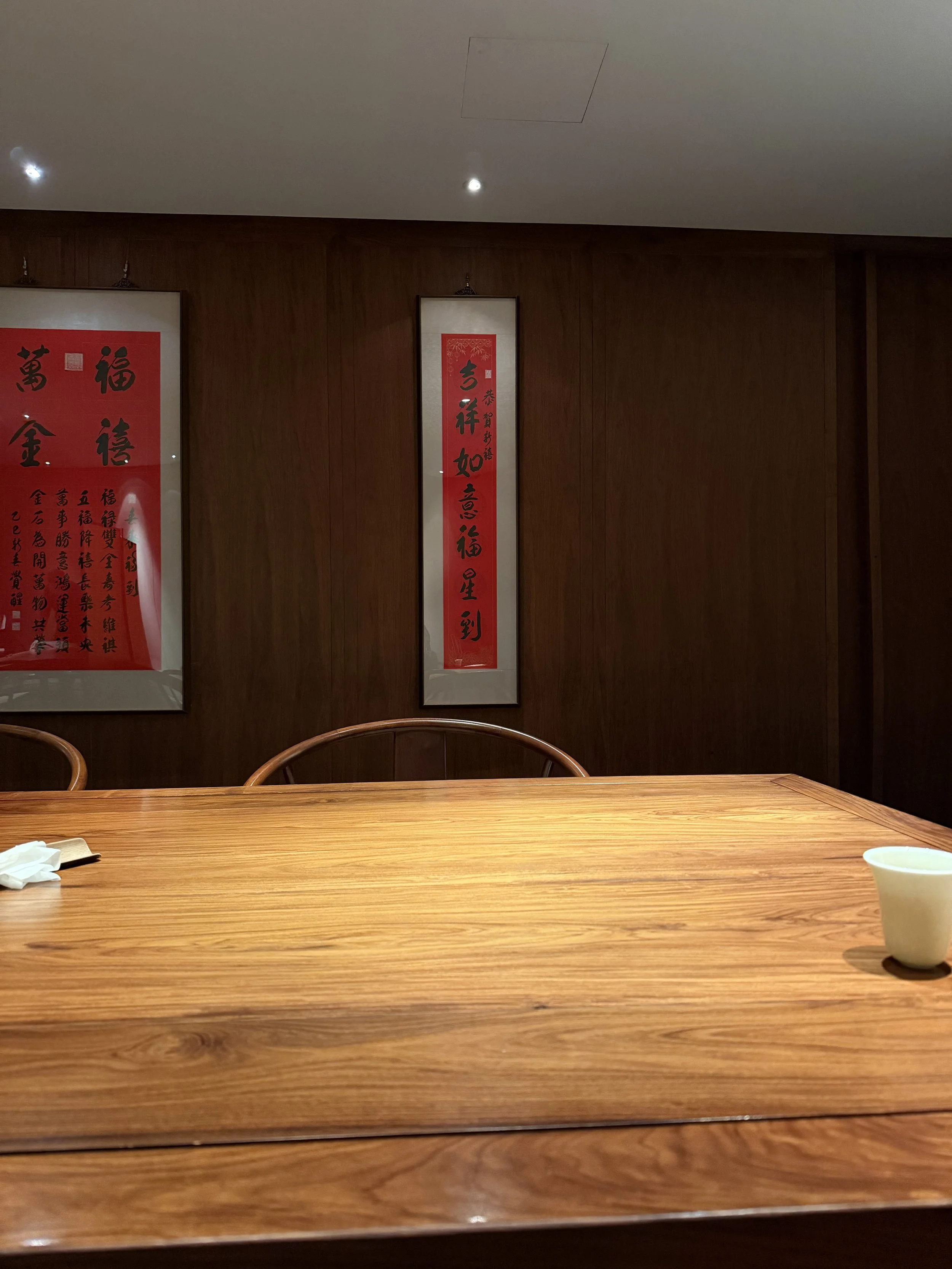
Room and table
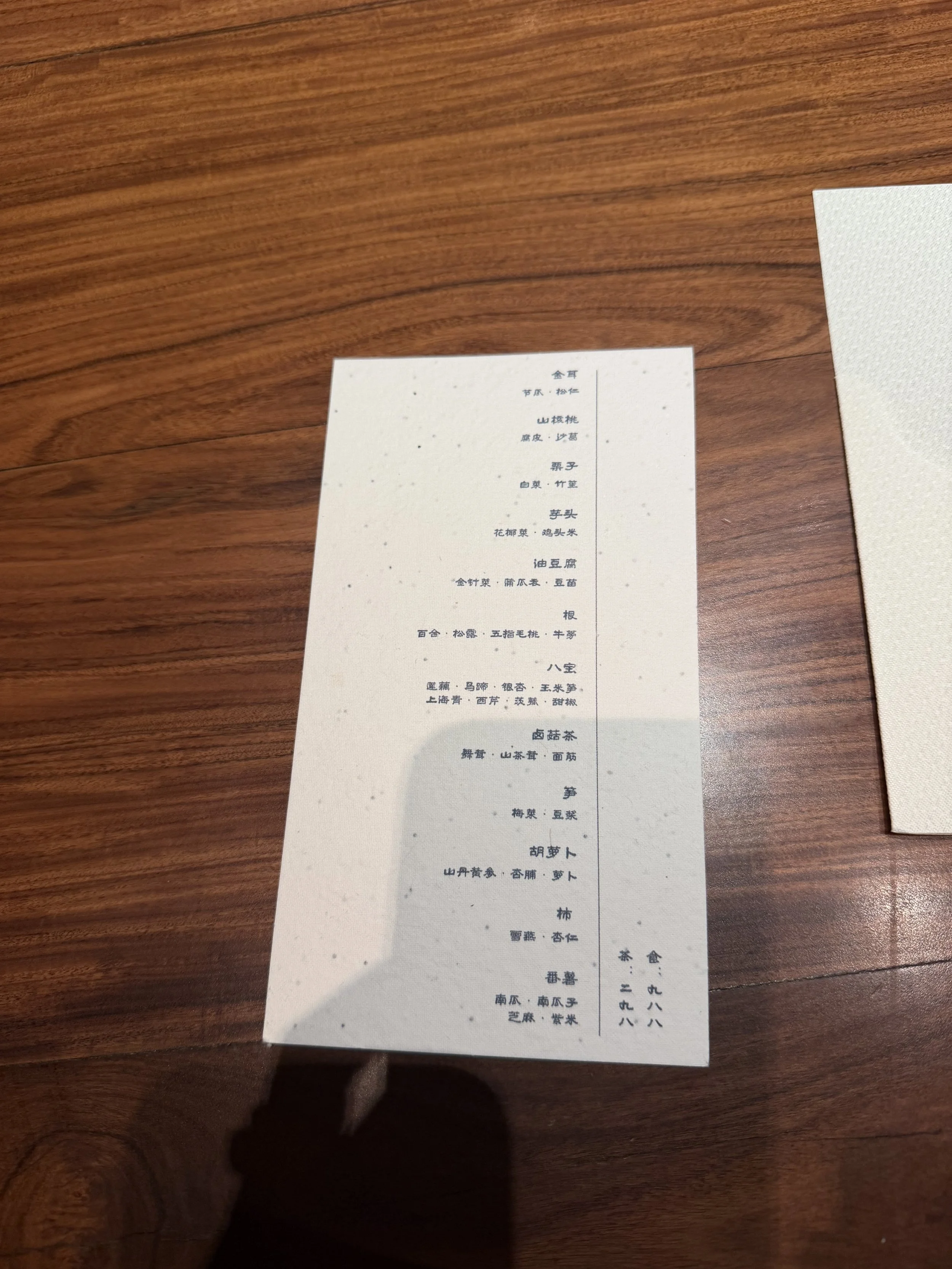
The menu was very nice, simple and fun to read. For the sake of my readers, this is the English translation (some with links to Wikipedia),
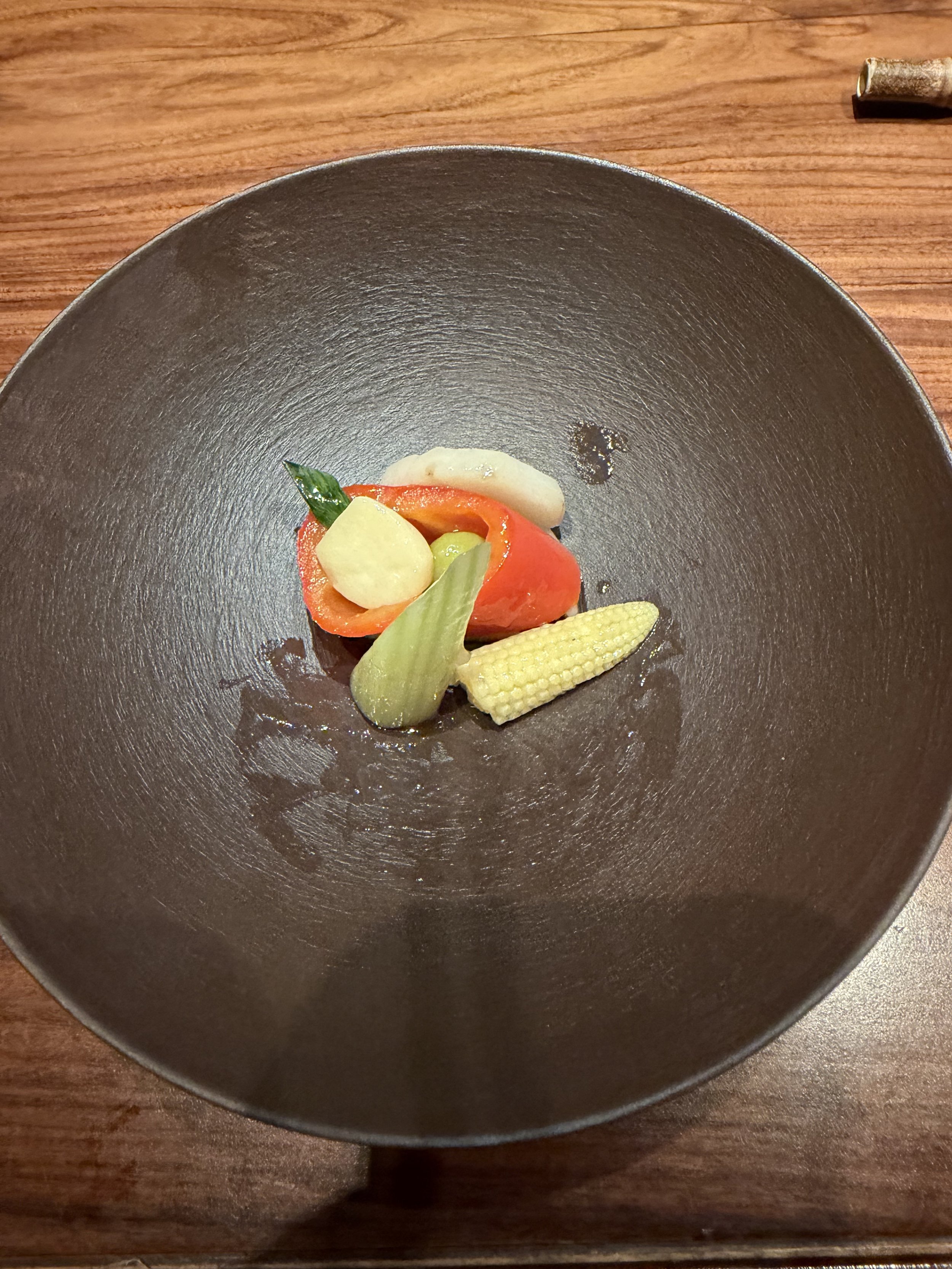
金耳 Golden jelly fungus - 节瓜 chi qua (jointed wax gourd), 松仁 pine nut山核桃 Chinese hickory -腐皮 tofu skin, 沙葛 jícama (mexican turnip)粟子 Chestnut - 白菜 cabbage, 竹笙 bamboo fungus芋头 Taro (Taro root) - 花椰菜 cauliflower, 鸡头米 makhana (popped lotus seeds)油豆腐 Fried tofu - 金针菜 enoki mushroom, 蒲瓜衣 calabash, 豆苗 pea sprout'根 Roots' - 百合 lily root, 松露 truffle, 五指毛桃 ficus hirta root, 牛蒡 gobō (burdock root)'八宝 Eight vegetable treasures' - 莲藕 lotus root, 马蹄 water chestnut, 银杏 ginkgo seed, 玉米笋 baby corn, 上海青 bok choy, 西芹 celery, 茨菰 arrowhead root, 甜椒 sweet pepper'卤菇茶 Bak kut teh (meat bone tea)', 舞茸 maitake ('dancing mushroom'), 山茶茸 shiitake (black mushroom), 面筋 seitan (gluten)笋 Bamboo shoot - 梅菜 mei gan cai (pickled mustard green), 豆浆 soy milk'胡萝卜 Carrot' - 山丹黄参 wild carrot, 杏脯 dried apricot, 萝卜 daikon柿 Persimmon - 雪燕 gum karaya, 杏仁 almonds番薯 Sweet potato - 南瓜 pumpkin, 南瓜子 pumpkin seeds, 芝麻 sesame, 紫米 black rice
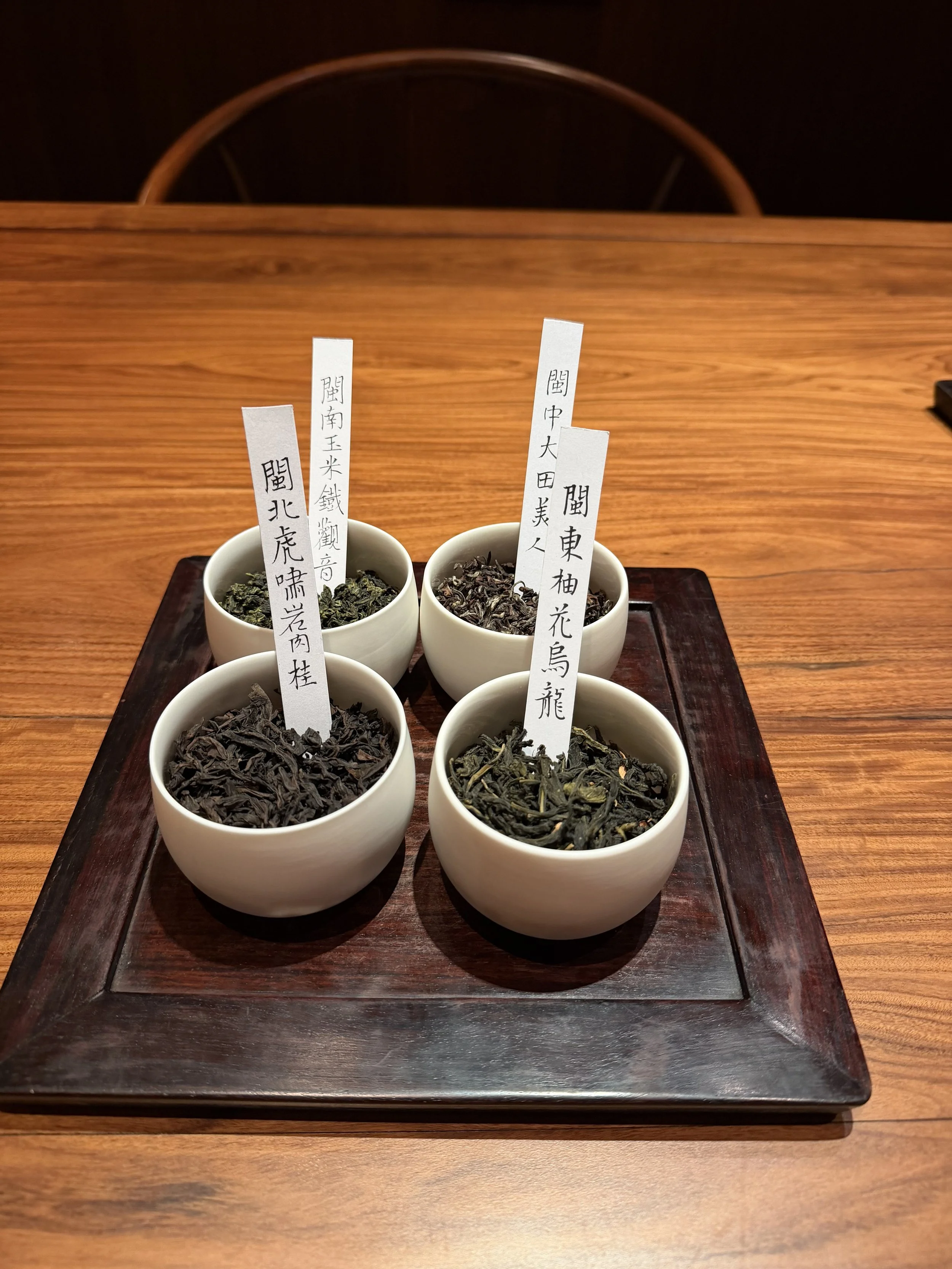
I also got a tea pairing consisting of four oolong teas, in fact they only have tea pair than wine pair.
Menu
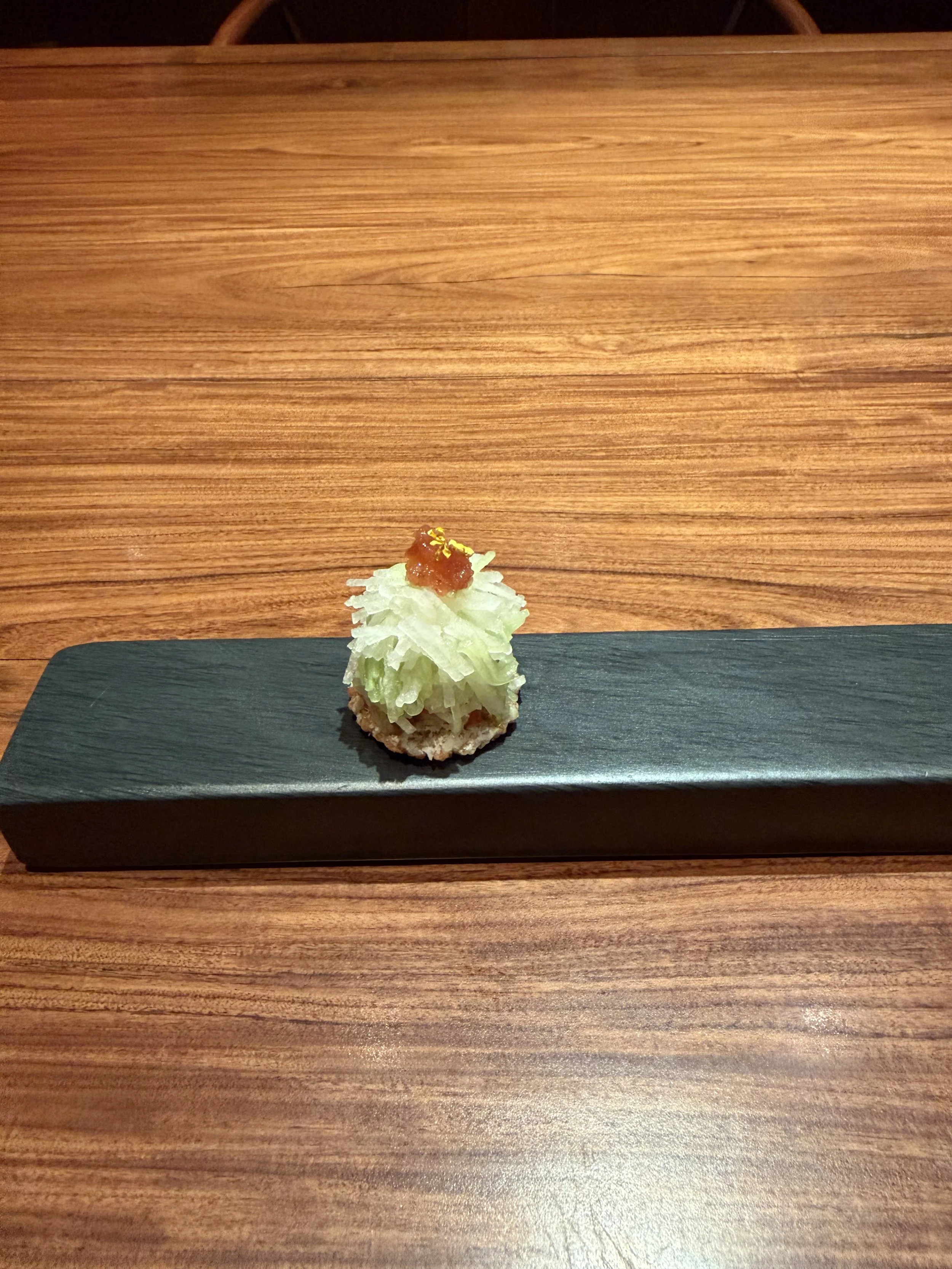
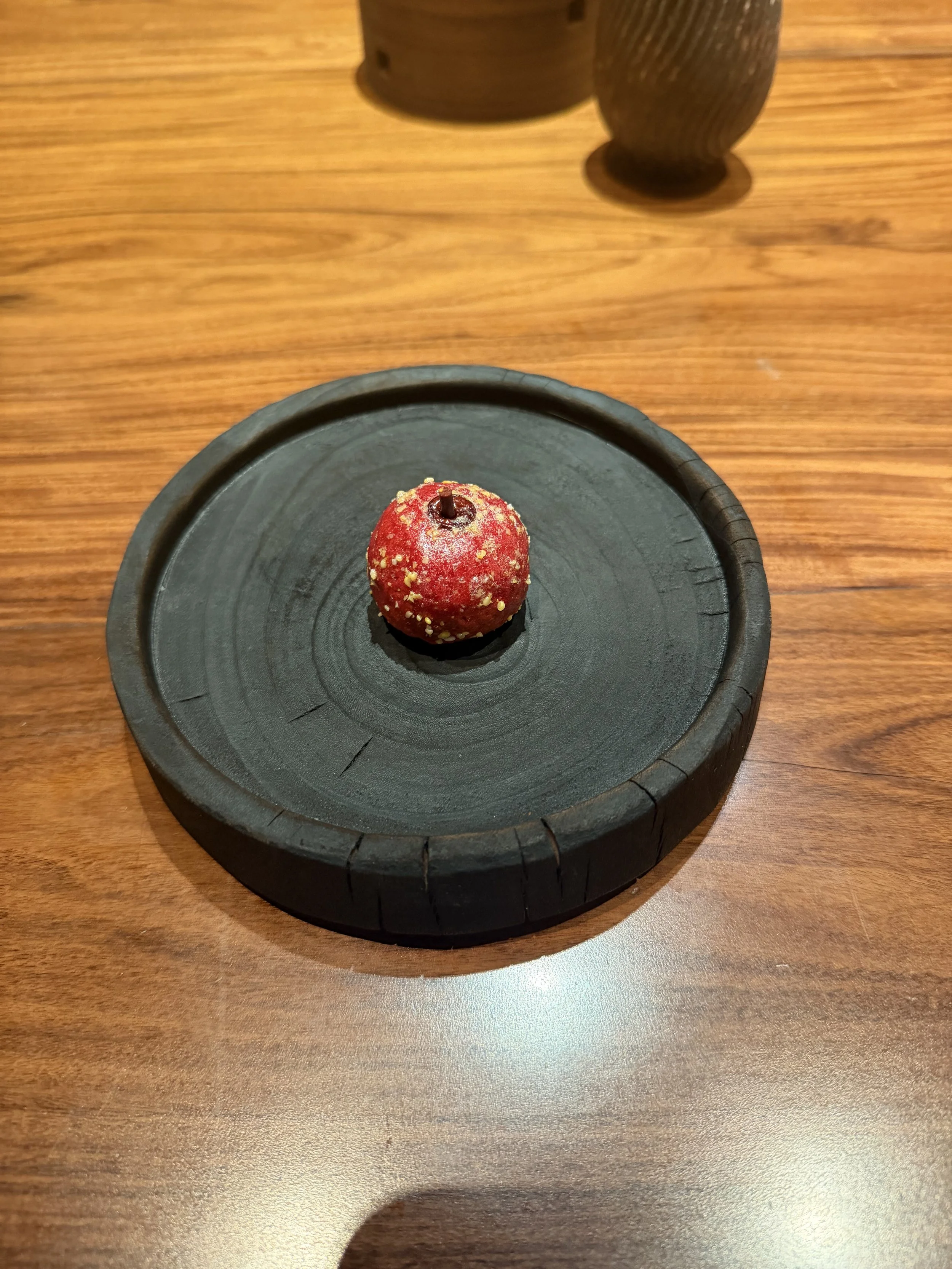
The first canapé, though not in the menu, was a fun start. The rice cake was topped with bitter melon and Akizuki pear juliennes (in light green) and mountain hawthorn sauce (in rose). I personally really liked bitter melon which, as the name suggests, has a unique bitter taste which is similar to celery, with a light sweet afterwards. This is in contrast to the pear with strong sweet taste but light bitter flavour afterwards. The mountain hawthorn, similar to many berries, provided a further level of sweetness, but it is much richer sweetness. This entire canapé used sweetness, bitterness and freshness opened up my palate very well. Also, the juliennes and rice cake provides a nice crunchiness.
Canapé - 山楂 Mountain hawthorn, 苦瓜 bitter melon and 秋月梨 akizuki pear on top of 米饼 rice cake
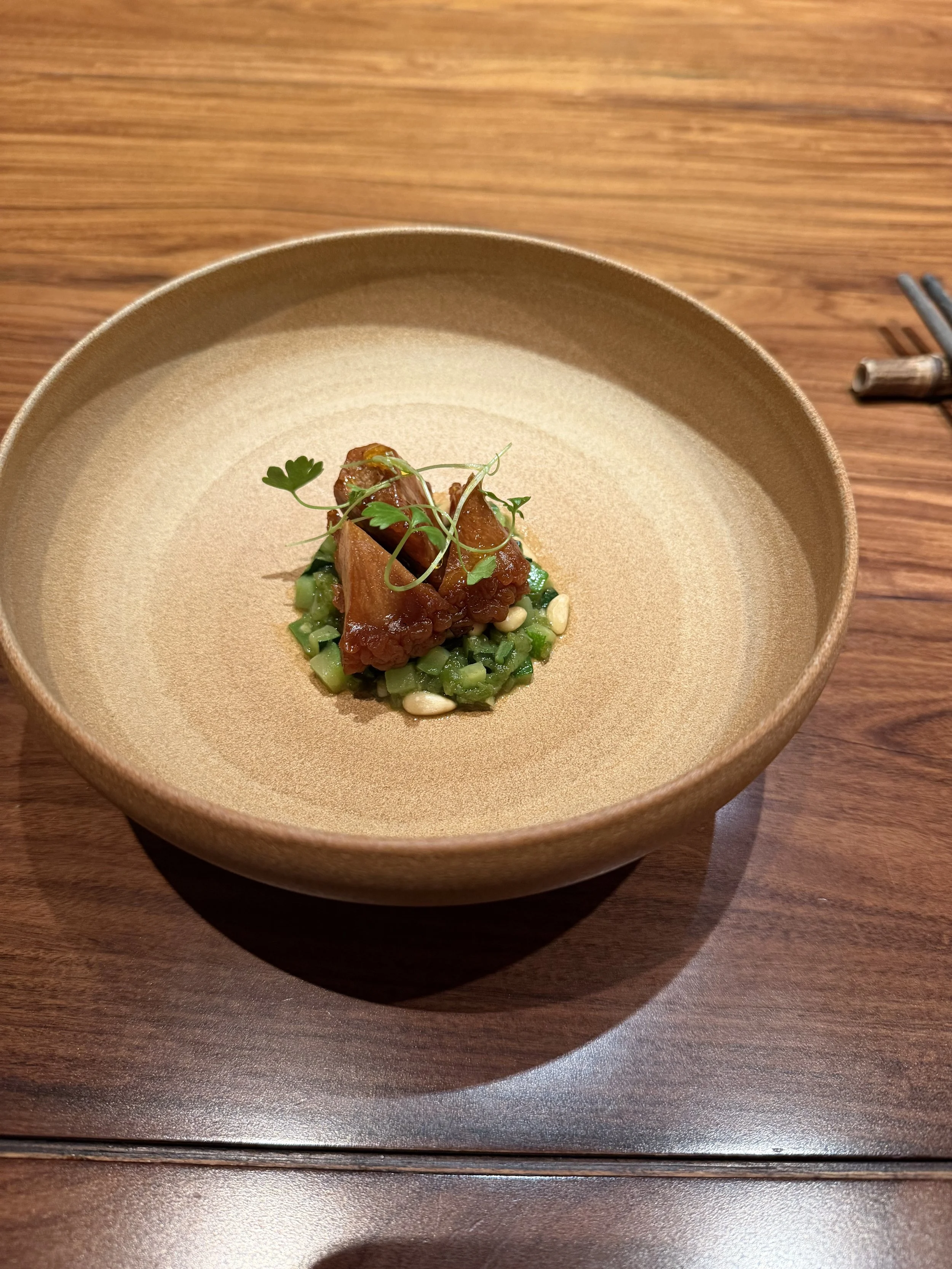
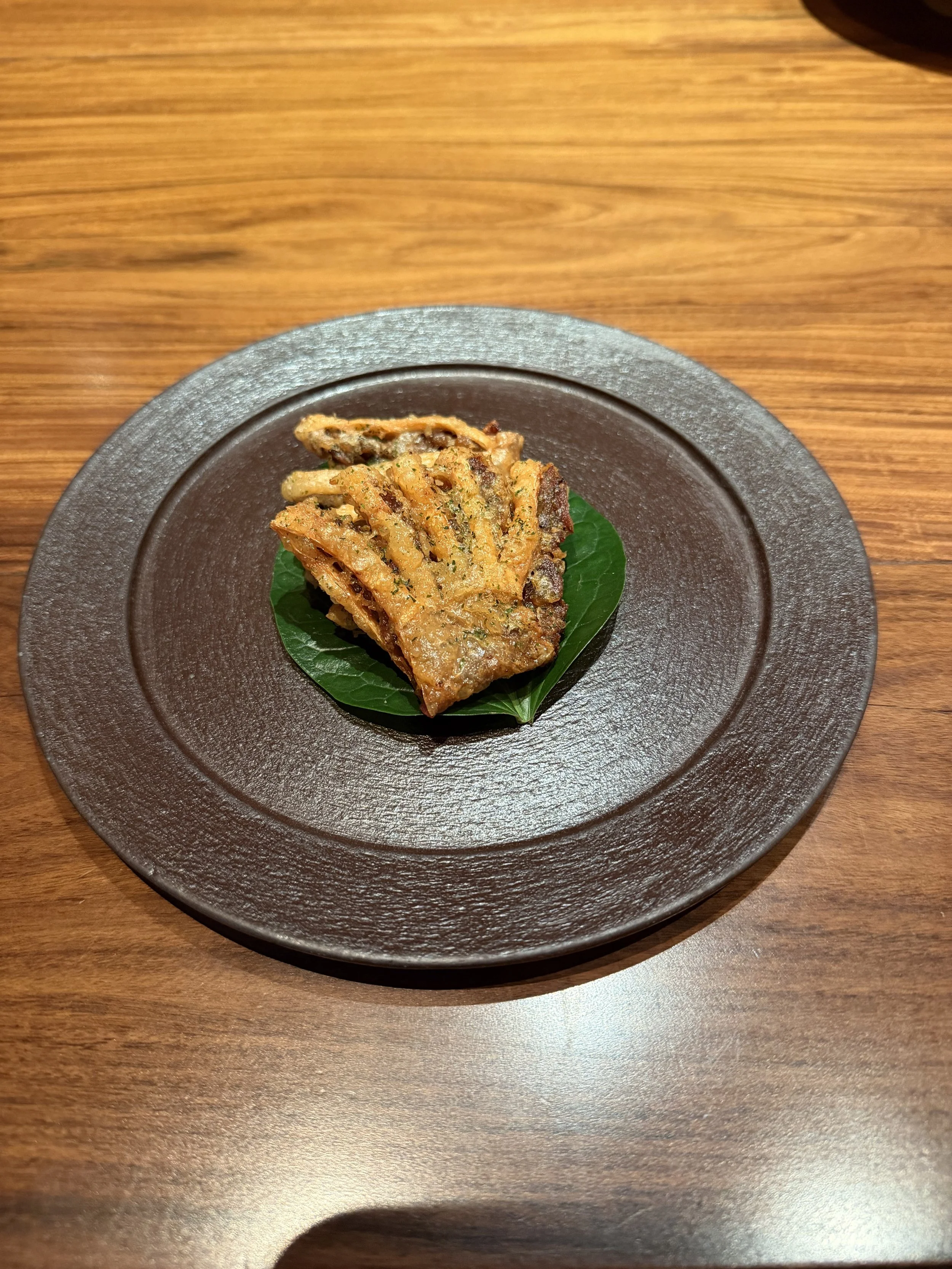
The Chinese hickory was impressive. The tofu skin wrapped mix of Chinese hickory and jícama was deep-fried and shaped into a hand. The tofu skin was very thin and, in fact, did not have much flavour, only a crunchy texture. The filling was very nice because the chef balanced the moisture and crunchiness well. Although it was slightly greasy, it was overall delightful with an earthy tone and sweetness. The light nori powder added some savory flavour, and the green leaf, which was edible, gave a strong bitter note yet a sweet aftertaste. To summarize, this was very Chinese in seasoning, with sweetness and bitterness. In fact, some might consider this a dessert; however, the chef added some savory elements to make it more of a dish.
山核桃 Chinese hickory - 腐皮 tofu skin and 沙葛 jícama (mexican turnip)
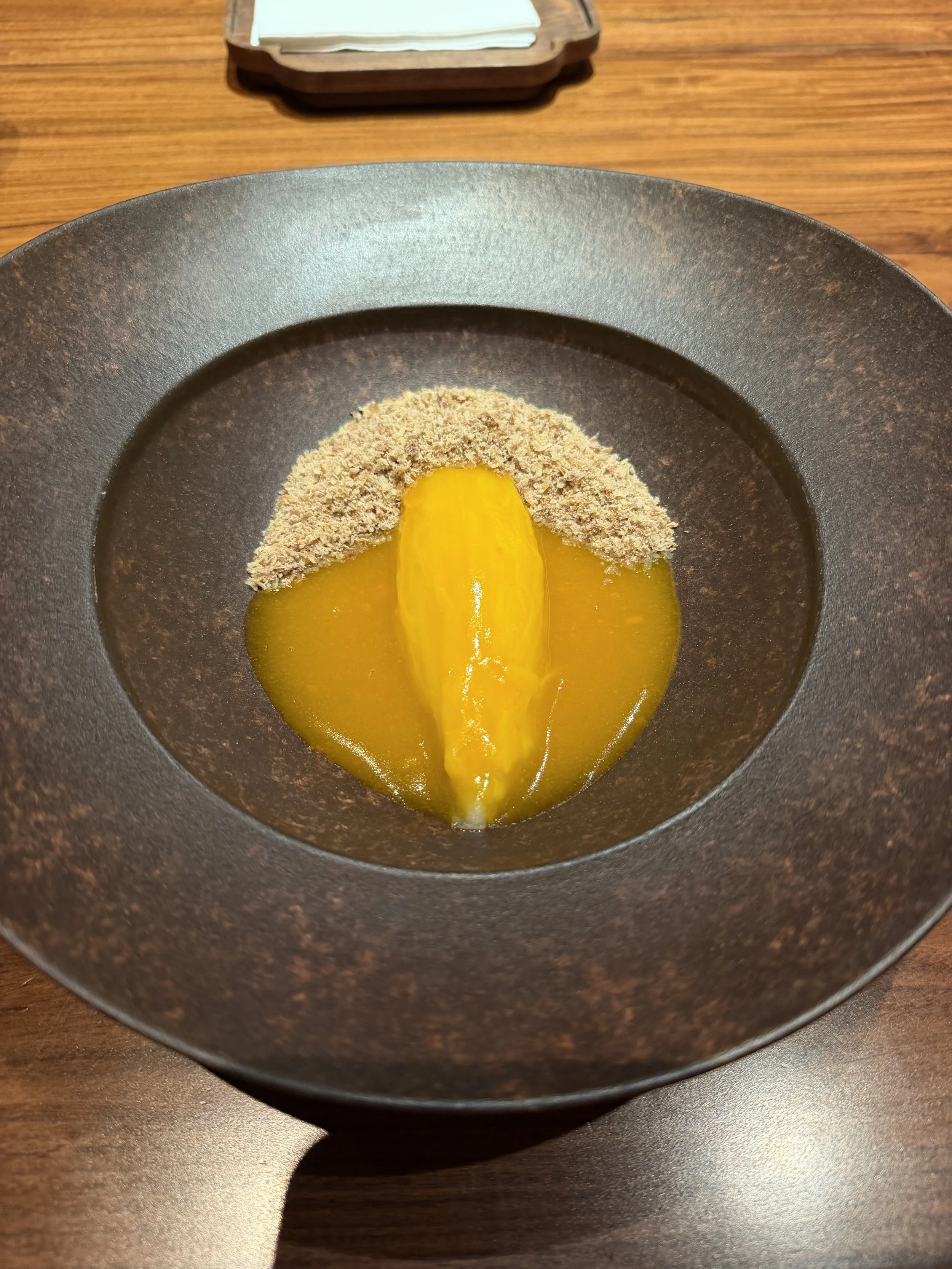
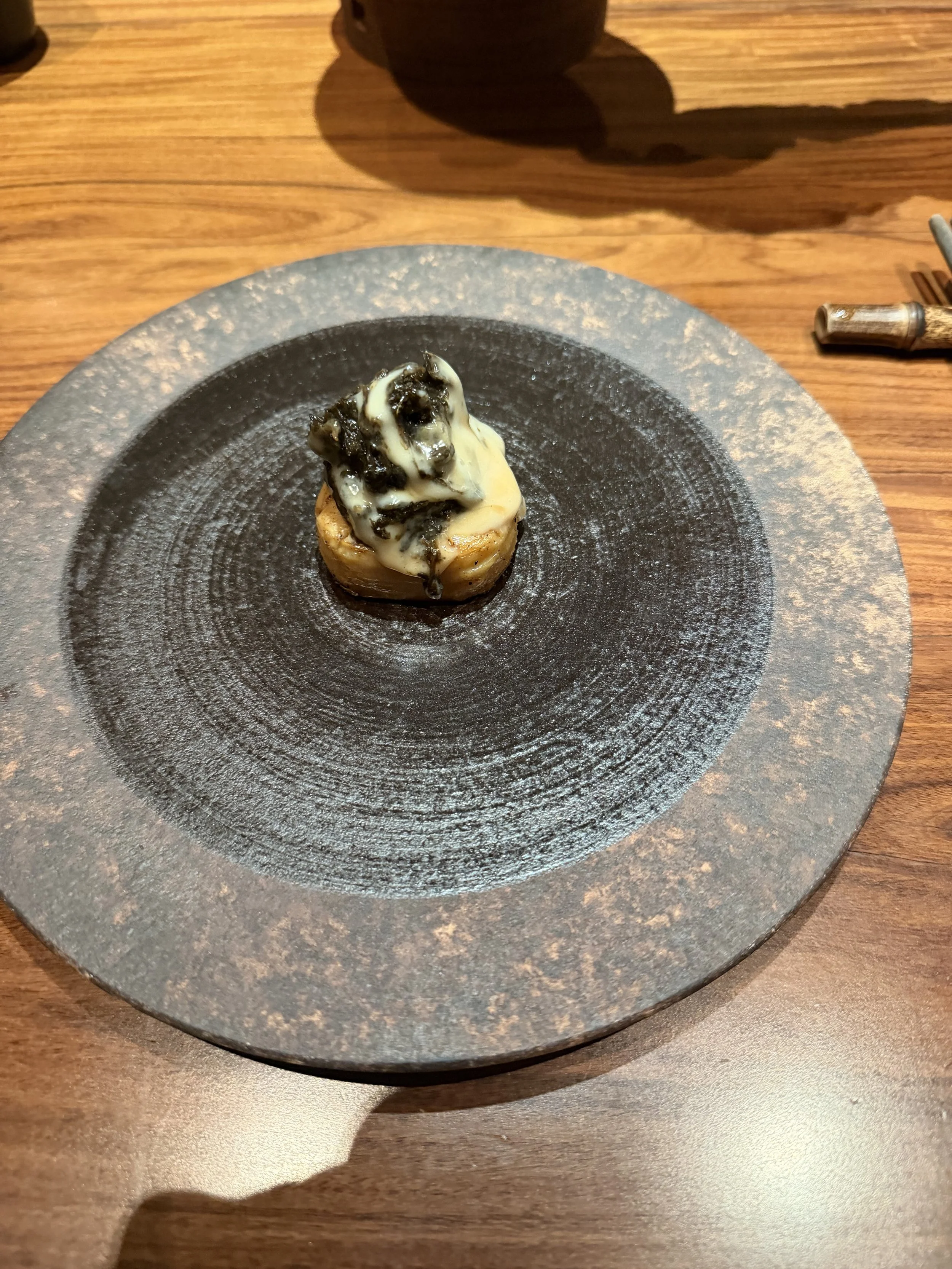
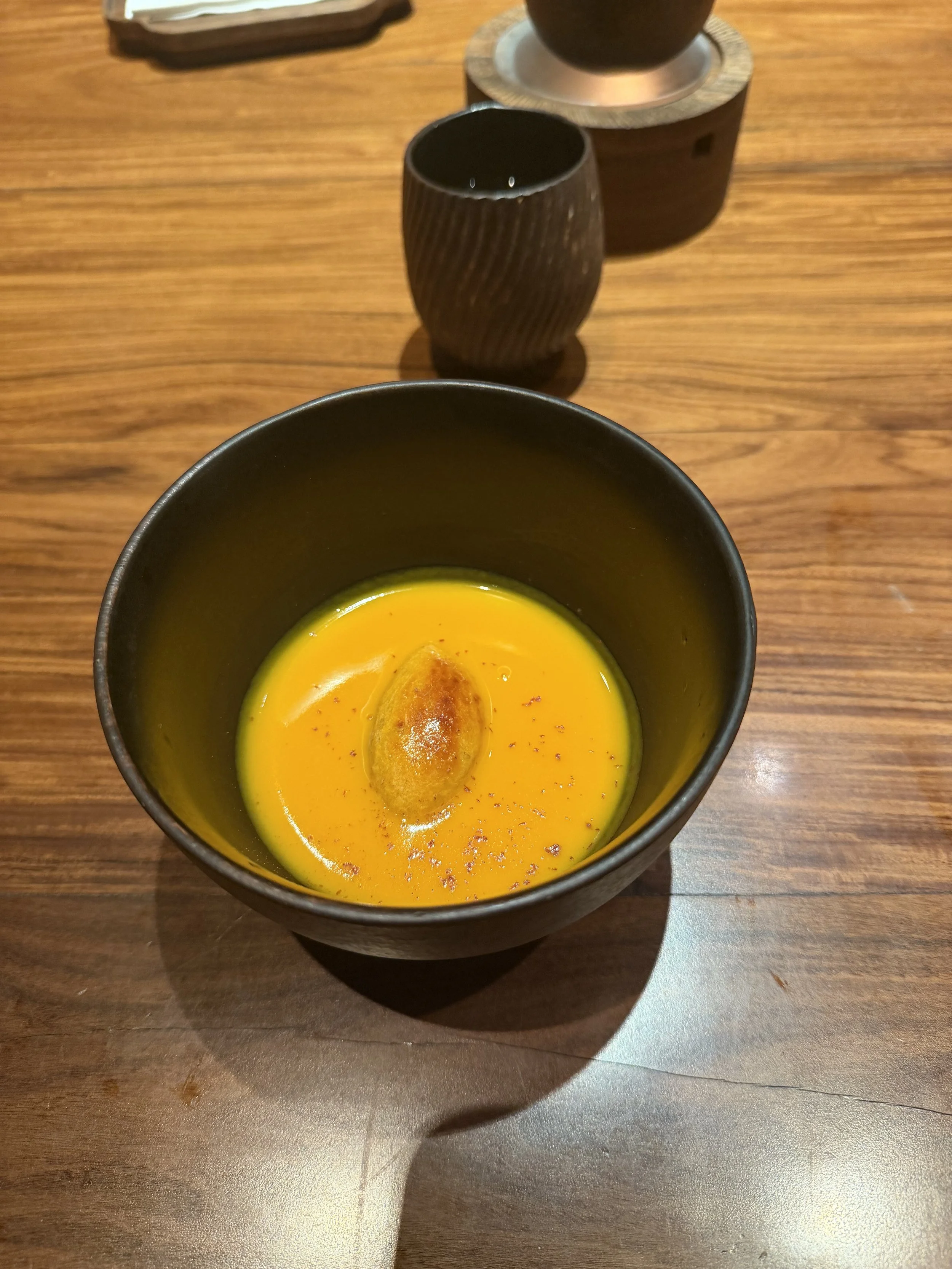
The next dish, chestnut & cabbage, was appealing as well. Although the menu named it “Chestnut” and chestnut appeared in the thick soup and as a topping, the main component of the dish was actually the cabbage at the centre. The cabbage lost almost all its fibre and structure and became part of the chestnut and squash soup. However, it still provided a sharp note against the very creamy, mild soup. The chestnut powder drizzles added a slightly coarse texture to the dish. Finally, although it didn’t contribute much, especially in such a strongly flavored soup, the bamboo fungus at the bottom added a very chewy texture. To me, this was a very well thought and fun dish: the main theme was creamy, mild, and warming, while the cabbage and bamboo fungus provided contrast.
粟子 Chestnut - 白菜 cabbage and 竹笙 bamboo fungus
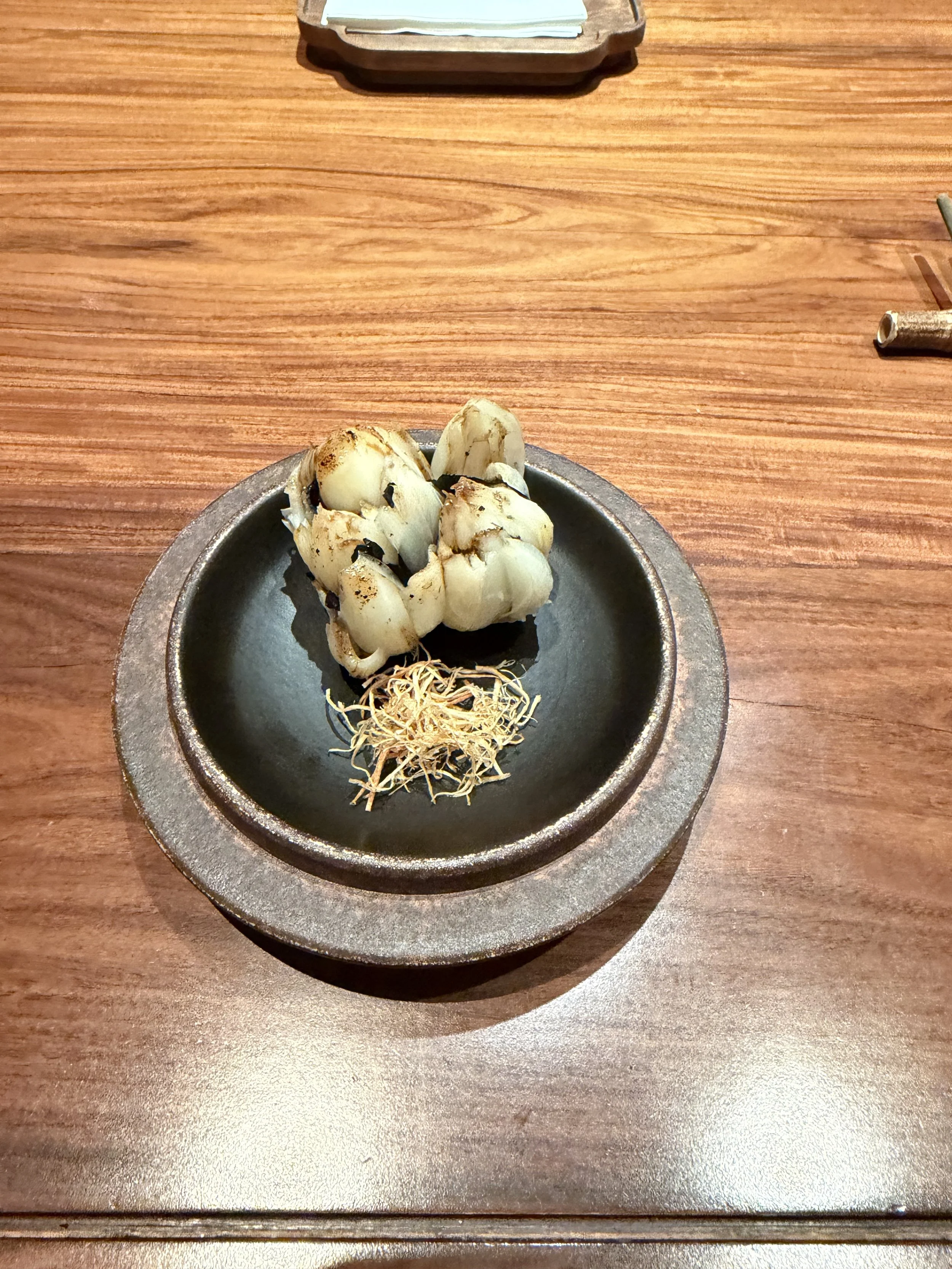
My favourite of the set was ‘roots’, a dish of several types of roots. The main part of this plate were flowers made from lily roots and extra petals made from truffle slices. The lily roots had unique bitter taste, with a very interestingly sweet aftertaste in mouth. This is in contrast to truffle slices, that despite not much, gave rich earthy and musky flavours and surprisingly combined well with lily roots. The lily roots have very pasty texture, like mesh potato. Yet I think such texture relied on the chef’s skill because it was easy to undercook, therefore too hard, or overcook, therefore losing the shape. The paired gobō were a nice side to the lily root. The thin-shredded and deep-fried gobō tasted of not much but it added crunchiness to the lily roots. Then where is the ficus hirta root? In fact, the entire dish was cooked, dry-smoked or dry-roasted with ficus hirta root; this gave a subtle smell and thus flavour of creamy but herb aroma, that was absorbed by the lily roots.
This is a very Chinese dish with a light westerner touch of truffles. The use of bitterness is much more common in Chinese cuisine, especially in Cantonese region where this dish is inspired. In the region, people especially master the various form of Chinese medicine, i.e., various vegetable and herb that give bitterness with sweet and fresh aftertaste, because the region has long wet and hot season. I love the fact that the chef made such unique flavour easier to be consumed by general public via mixing other tastes, and also presented in such fancy level.
'根 Roots' - 百合 lily root, 松露 truffle, 五指毛桃 ficus hirta root, 牛蒡 gobō (burdock root)
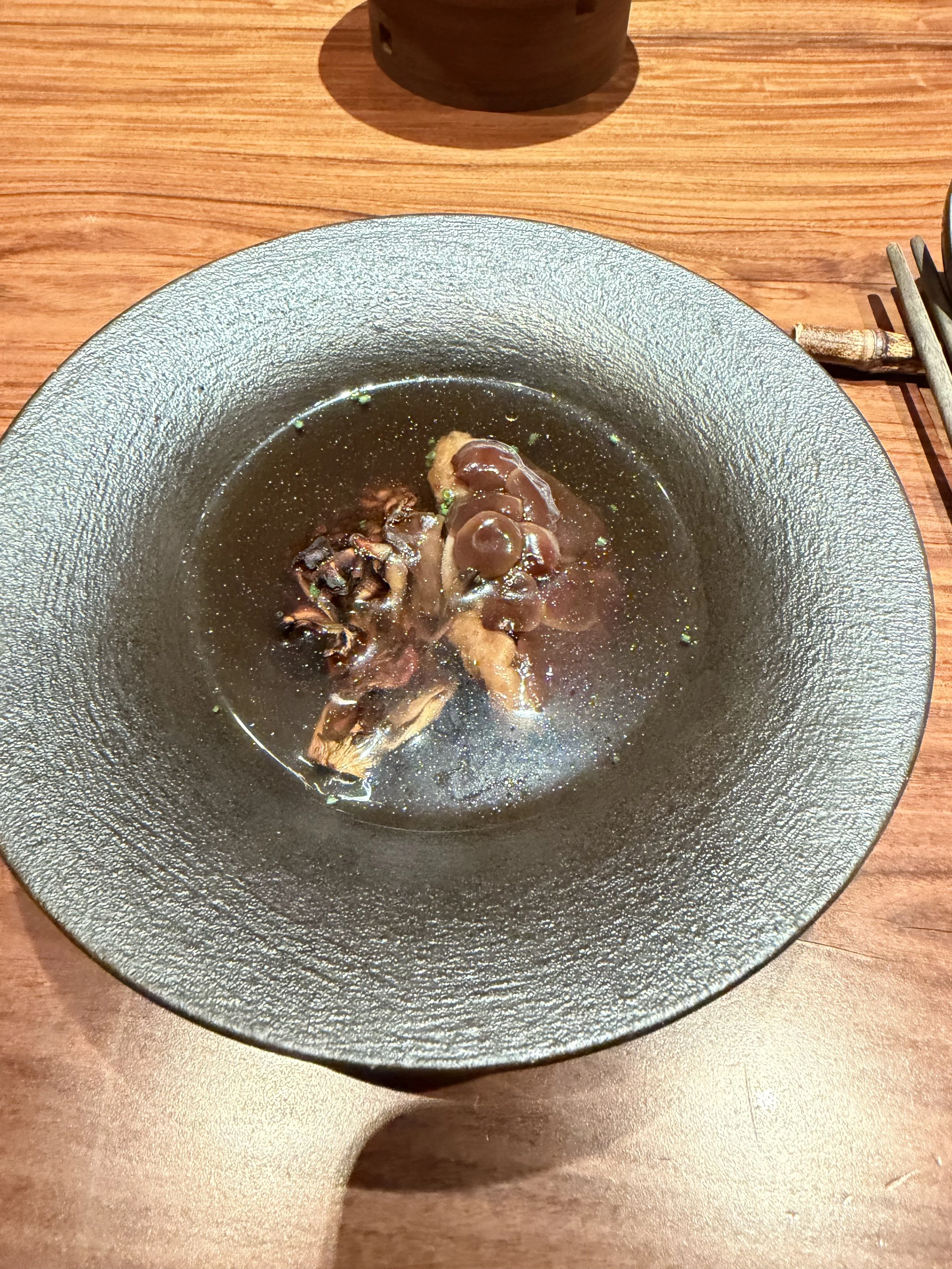
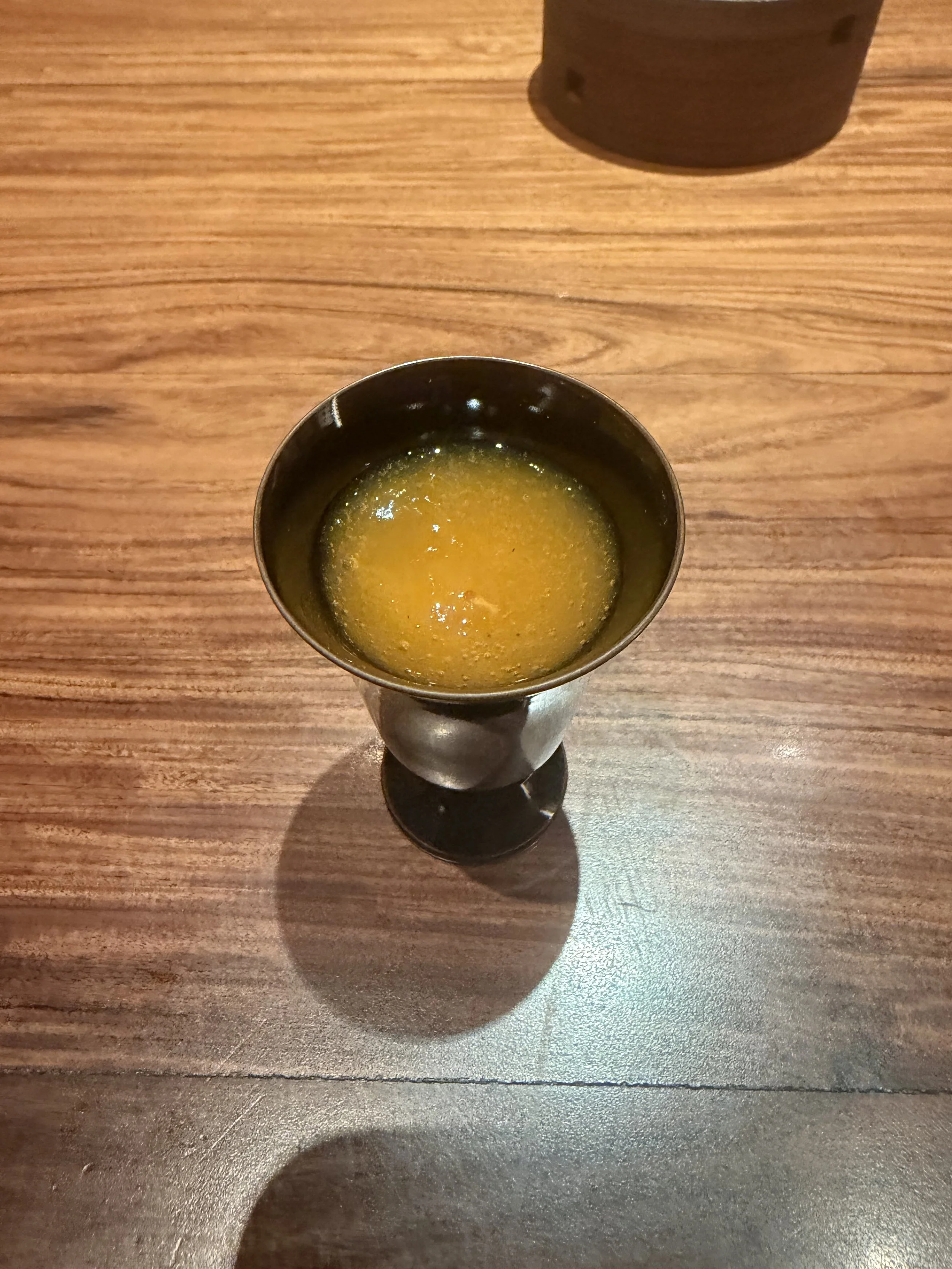
Let’s move to ‘Bak kut teh (meat bone tea)’. The traditional Bak kut teh should be pork rib thin broth with pork and various mushroom. Obviously in here a vegetarian restaurant, it was mushroom based broth and only with mushrooms. Yet, as the tradition, also similar with the ‘root’, the broth was made from various Chinese medicines, that mostly of them have no proven medical effect but provide strong bitter and sharp flavours. This emphasised and strengthened the earthy and musky mushrooms. The mushrooms varied from smooth creamy, and jelly-ish style, shiitake, to dry sharp and soil-flavoured style, maitake. The seitan provided a strong illusion of meat. It also absorbed a lot of broth, making themselves juicy.
This is also a great representation of Chinese cuisine in general: foods soaked a thin broth, rather than, common in the west, thickened soup or sauce coating the food. Very often the broth is the challenge instead of the food, as it need good seasoning skill and time.
'卤菇茶 Bak kut teh' - 舞茸 maitake ('dancing mushroom'), 山茶茸 shiitake (black mushroom) and 面筋 seitan (gluten)
As I stated in the beginning of this blog, this was certainly a best restaurant I have tried this year. First, vegetarian is very difficult; it certainly did much better job than Eleven Madison Park, NYC (in fact, Eleven Madison Park now also served fishes now if requesting). Second, the chef used various ingredients, and they actually tasted different rather than all dishes dominated by particular types of seasoning or sauces. Besides, it is a great glimpse of some uncommon Chinese ingredients even for Chinese people. Last, the entire set played around (1) bitterness and sweet aftertaste from vegetable roots and stems, (2) Many types of mushrooms of creaminess, earthiness, muskiness, richness, etc., and (3) soy and tofu to provide the taste of proteins, all of which are very unique to Chinese cuisines.
🐼 Score: 5/5